
Special Events
- Home
- Coference day Workshops
- Workshop Registrations
Workshops
Trainer
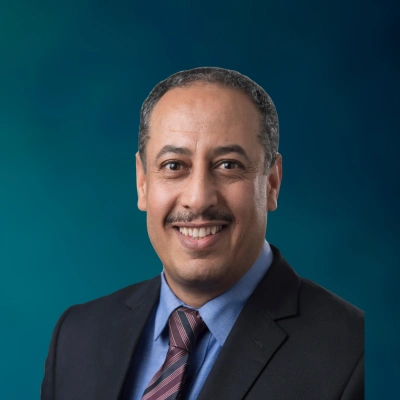
Prof. Mohammed Alshawesh
Online Workshop on
“Systematic Review and Meta-analysis in Medical/Health in Research”
- 13 - May, 2026
- 09:00 am - 05:30 pm
Synopsis
Systematic review is defined as the application of strategies that limit bias in the assembly, critical appraisal, and synthesis of all relevant studies on a specific topic. It may include a meta-analysis, which is a quantitative summary of the results. Considering their necessity in establishment of therapeutic decisions for clinical guidelines, systematic review and meta-analysis should be performed intensively. These studies are actually simple, inexpensive and of course doable in work from home setting, yet they are highly appreciated for clinical recommendation as well as publication in highly reputable international journals.
Workshop outlines
- Overview of Systematic Review
- Steps of Systematic Reviews
- Formulating the research question, developing search strategy and eligibility criteria
- Registration of Systematic Review in PROSPERO
- Searching the literature, screening, selecting studies
- Summarizing the findings using PRISMA flow diagram
- Critical appraisal and quality assessment (risk of bias assessment tools)
- Data extraction
- Meta-analysis using RevMen
- Effect size estimation (Random effect model vs. Fixed effect model)
- Reporting and interpreting of meta-analysis findings (forest plot, heterogeneity, funnel plot and sensitivity analysis)
Schedule
Time | Session |
08:30-09:00 | Registration |
09-00-10:00 | Overview and steps of Systematic Review |
10-00-11:00 | Search strategy protocol (formulating the research question, developing search strategy and defining eligibility criteria) |
11-00-11:30 | Break |
11-30-13:00 | Searching the literature for primary studies, screening and selection process |
13:00-14:00 | Lunch break and prayer |
14:00-16:00 | Critical appraisal and quality assessment (Risk of bias assessment tools) & Data extraction |
16:00-17:30 | Meta-analysis using RevMen and effect size estimation |
Trainer

Prof. Dr. Syed Hatim Noor
UniSZA, Malaysia
Online Workshop on
"Application of Intermediate level Multivariable Statistical Methods in Medical and Health Sciences Research"
- 13 - May, 2026
- 09:00 am - 05:00 pm
Objective of the workshop
To introduce participants intermediate level multivariable statistical methods to be applied in medical and health sciences research
Expected outcomes of the workshop
Participants are expected to be able to
- understand concepts and applications of multivariable and multivariate analyses
- analyse multiple linear and multiple logistic regression intermediate level multivariable statistical analysis methods
- interpret and conclude the findings from statistical analyses
- present the findings with appropriate statistical parameters of two regression analyses with tables and graphs
Schedule
Session | Time | Topic |
Session 1
| 9:00-10:00 | Introduction, overview and selection of appropriate multivariable and multivariate statistical methods
|
10:00-11:30 | Multiple Linear Regression I
| |
11:30-13:00 | Multiple Linear Regression II
| |
Lunch and break for prayers
| ||
Session 2
| 14:00-15:30 | Multiple Logistic Regression I
|
15:30-17:00 | Multiple Logistic Regression II
| |
| 17:00 | End of training course
|
Trainer

Prof Emeritus Dato' Dr. Syed Mohamed Aljunid
Conference Day Workshop
"DRGs/Casemix For Prospective Provider Payment Method in Health Services"
- 13 - May, 2026
- 08.30 am - 01.00 pm
Workshop Overview
This workshop aims to introduce participants to the DRG/Casemix system, focusing on enhancing the quality and efficiency of healthcare services. Recent discussions surrounding proposed increases in private insurance premiums have prompted the government to consider Diagnosis-Related Groups (DRGs) or Casemix as alternative provider payment methods. During a recent Town Hall meeting organized by the Ministry of Health, the application of DRGs for non-admitted cases in health centers was a key topic of discussion.
Primary care centers typically serve as gateways for patients accessing secondary and tertiary care within health financing programs. Designed for public health specialists and professionals, this workshop will provide foundational knowledge on DRGs and Casemix, equipping participants with the skills necessary to manage these systems effectively in the future. Professor Dato’ Dr. Syed Mohamed Aljunid, a Casemix expert from the Department of Public Health and Community Medicine at IMU University, will share his extensive experience in implementing Casemix systems across various developing countries. Additionally, Associate Professor Dr. Mohd Hafiz Jaafar from the Public Health Unit, Department of Primary Health Care at Universiti Sains Islam Malaysia will provide insights into the local implementation of the Casemix system. Attendees can expect an overview of the evolution of the DRG/Casemix system, beginning with its introduction in the 1980s by Professor Robert Fetter at Yale University.
Today, this system is utilized in over one hundred countries worldwide. The workshop will delve into the Minimum Data Set required for the Casemix system, including the coding requirements for diagnoses and procedures using the ICD classification system. Furthermore, the benefits of utilizing the Casemix System as a tool to support quality assurance programs will be discussed, highlighting its advantages as a prospective provider payment mechanism under National Health Insurance programs. Participants will also have the opportunity to see demonstrations of software currently available to support the implementation of the Casemix system, including the recently launched MY-DRG casemix grouper—an advanced, dynamic grouper software. A pragmatic approach to planning the implementation of the Casemix system at health centers and hospitals, as well as at a national level, will also be presented during this workshop.
Workshop Objectives:
At the end of the Workshop, participants should be able to:
- Understand the concept of DRGs/Casemix System as a special classification of patient’s episode of care
- Appreciate the role of DRGs/Casemix System in enhancing quality and efficiency of healthcare services.
- Design the basic minimum data set package for DRGs/Casemix System Implementation.
- Recognise the importance of costing methods in DRGs/casemix system
- Acquire skills to the use of MY-DRGs/Casemix Grouper
Workshop Topics:
- Casemix System for Quality and Efficiency in Public Health Services
- Coding of Diagnosis and Procedures in Casemix/DRGs
- Costing Methodology in Casemix /DRGsSystem
- Softwares in Casemix System for Primary Care Services
- Plan for Implementation of Casemix System Health Facilities
Target Audience:
- Hospital Managers
- Public Health Medicine Specialists
- Medical Officers
- Family Medicine Specialists
- District Health Officers
- Directors and Deputy Director of Health Services
- Quality Assurance Managers
- Medical Record Officers
- Health Information Technology Managers
- Nurses
- Pharmacists
- Researchers in Public Health and Health Services Management
Schedule
8.00- 8.15am: Registration
8.15 – 8.30 am: Opening Remarks
8.30 – 9.30 am: Casemix System/DRG for Quality and Efficiency in Health Care Services
9.30-10.30 am: Coding of Diagnosis and Procedures in Casemix/DRGs
10.30 – 10.45am: Tea Break
10.45 – 11.30am: Costing Methodology in Casemix/DRGs
11.30 – 12.00pm: Use of MY-DRG Casemix Grouper
12.00 – 12.30 pm: Plan of Action For Implementation of DRG in Health Facilities
12.30 – 13.00 pm: Question & Answer Session /Closing Remarks
Trainer

Dr. Mohd Nor Akmal Bin
Conference Day Workshop
"Transforming Healthcare and work with AI"
- 13 - May, 2026
- 02.00 pm - 06.00 pm
Synopsis
As we approach the 2030 deadline for the Sustainable Development Goals (SDGs), global health systems face a critical implementation deficit. Artificial Intelligence (AI) has emerged as a definitive accelerator, capable of enabling 79% of SDG targets, particularly SDG 3 (Good Health and Well-being). From predictive analytics for infectious disease surveillance to generative AI for streamlining hospital administration, the potential is vast. However, the deployment of AI in diverse and low-resource settings carries significant risks, including the exacerbation of the “digital divide,” the entrenchment of algorithmic bias, and threats to data sovereignty.
- Strategic Applications: How AI is currently reshaping diagnostics, disease surveillance, and workforce optimization.
- Governance & Ethics: Navigating the WHO’s regulatory considerations and the “black box” problem to ensure safety and trust.
- Practical Implementation: Designing AI interventions that are equitable, locally owned, and integrated into Digital Public Infrastructure (DPI)
Learning Objectives:
By the end of this workshop, participants will be able to:
- Identify specific SDG targets that can be accelerated through AI adoption.
- Distinguish between the benefits and risks of Generative AI vs. Predictive AI in public health contexts.
- Formulate strategies to mitigate algorithmic bias and data poverty in their specific local contexts
Schedule
Time | Module | Description |
14:00 – 14:45 | Module 1: The Strategic Imperative – AI as an SDG Accelerator | Theory & Context: • The AI-SDG Nexus • From Reactive to Proactive • Types of AI in Health |
14:45 – 15:45 | Module 2: Evidence from the Frontlines – Real- World Case Studies | Practical Application: • Case Study A (Infectious Disease) • Case Study B (Maternal Health) • Case Study C (Surveillance) • Case Study D (Workforce Support) |
15:45 – 16:00 | Coffee Break | |
16:00 – 17:00 | Module 3: The “Silent Threats” – Ethics, Equity, and Governance | Critical Theory: • The Myth of Neutrality • Data Poverty & The Digital Divide • Regulatory Landscapes • Generative AI Risks |
17:00 – 17:50 | Module 4: Interactive Workshop – Designing for “Responsible AI” | Practical Exercise |
17:50 – 18:00 | Closing Remarks & The Path Forward | |
Workshop Registration Fee
-
Systematic Review and Meta-Analysis in Medical/Health Research RM 500 (USD 125)
-
Application of Intermediate-Level Multivariable Statistical Methods in Medical and Health Sciences Research RM 500 (USD 125)
-
DRGs/Casemix for Prospective Provider Payment Methods in Health Services RM 500 (USD 125)
-
Transforming Healthcare and work with AI RM 150 (USD 40)